
How to Get Court Records
Begin with the court and judicial district. Circuit Clerk Daryl Burney holds Circuit civil and criminal filings, indictments, motions, judgments, and executions. Chancery Clerk Donald Gray holds family, estate, guardianship, adoption, equity, and land-related files. Justice Court Clerk Jacqueline P. Spensor holds Justice Court materials. A municipal citation or ordinance record remains with the issuing city court unless it has become an appeal.
PAMEC offers a paid public route for non-restricted electronic records in participating Circuit and Chancery cases. When that route does not fit, use the correct clerk’s counter, phone, mail, or published email. The county has no court-specific copy request form or fee schedule, so call first to confirm custody, cost, payment method, and whether a request can be fulfilled by mail, email, fax, or in person.
- Identify the court, judicial district, case number, filing year, and the exact item needed.
- For a participating Circuit or Chancery case, register for a PAMEC non-attorney account and use its read-only electronic access.
- For clerk access, call or visit the appropriate Circuit, Chancery, Justice, or Municipal Court custodian.
- For a mail or email request, state the case information, record type, return address, and a telephone number, then wait for fee and payment instructions.
- Specify whether a plain, certified, or exemplified copy is required. A PAMEC screen print is not itself certified.
Yalobusha Court Record Clerk Custody
Yalobusha’s split clerk structure is the key to an efficient request. The Circuit Clerk page describes the Circuit office’s filing, judgment, and execution duties. The Chancery Clerk page identifies the separate Chancery office for domestic, probate, guardianship, adoption, property, and equity work. A request sent to the wrong clerk can add avoidable delay.
Yalobusha County Circuit Clerk
14400 Main Street, Suite 1
Coffeeville, MS 38922
662-675-8187
Official Circuit Clerk contact details
Yalobusha County Chancery Clerk
P.O. Box 260
Coffeeville, MS 38922
662-675-2716
Official Chancery Clerk contact details
The corresponding Second Judicial office numbers are 662-473-1341 for Circuit and 662-473-2091 for Chancery. Ask which judicial district holds the file before sending a request.
The county departments directory supplies the local office context for a clerk request.
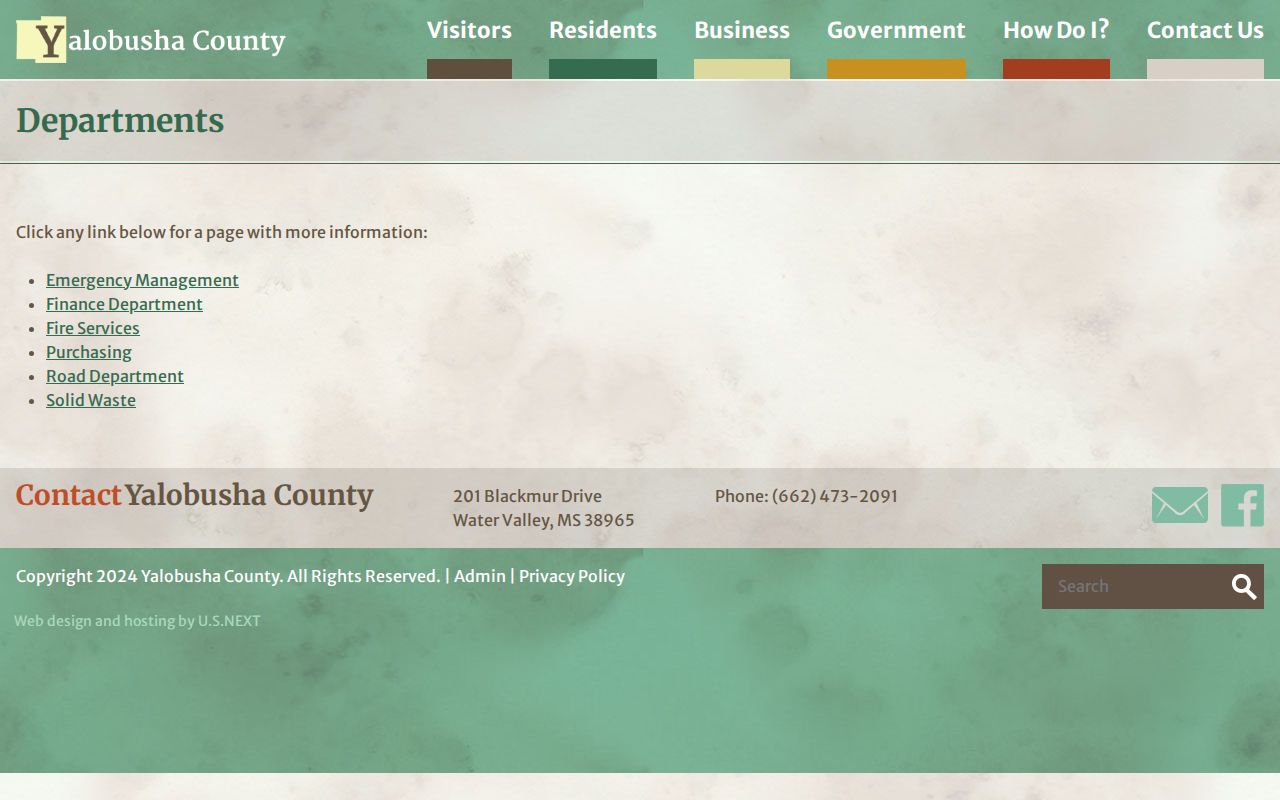
The directory helps identify county offices, but the named Circuit, Chancery, Justice, or city court custodian decides a court-record request.
Types of Court Records
A docket sheet is the chronological index of activity. Filed documents are the petitions, complaints, motions, answers, notices, orders, and judgments behind individual entries. A certified copy is an authenticated clerk-issued copy, which is a separate product from a public screen view. The correct item depends on the purpose of the request and the record custodian.
- Circuit docket sheets, indictments, motions, orders, judgments, and execution-related records.
- Chancery divorce, custody, estate, guardianship, adoption, equity, and land-related case materials.
- Justice Court traffic, DUI, limited civil, misdemeanor, and preliminary felony materials.
- Municipal Court city traffic, ordinance, and misdemeanor records held by the issuing city court.
- Historic bound dockets and related volumes that may be held by the clerk or Mississippi Department of Archives and History.
Yalobusha Historic Docket Books
Older records follow a different path. The research inventory for the Mississippi Department of Archives and History identifies Yalobusha Circuit appearance, issue, conviction, execution, state, subpoena, minute, and record books. It also identifies Chancery fee, judgment, and rule-docket volumes, as well as Justice Court dockets and probate material.
Start with the clerk because current custody and microfilm availability can vary. If the clerk directs a historical request to the Archives, provide the court, approximate year, record series, and case or party information. A modern PAMEC search with no result does not establish that an older record was never kept. Note: Some historic material has access restrictions, so archive staff may need to review the request.
The Mississippi Legislature’s Code gateway is a starting point for checking statutes that affect an older or restricted record.
A code lookup supplies statewide legal context, while the clerk or Archives confirms what a particular Yalobusha volume contains and whether it can be copied.
What a Court Record Contains
Live PAMEC case-field layouts were not visible without an account, so public-facing descriptions should not invent local field labels. A record normally combines identifying case information with the docket history and the filed items connected to that history. The clerk can confirm whether a requested item is in the electronic file, a paper file, microfilm, or archival custody.
| Case number | The court’s unique identifier. Yalobusha does not publish a standard display pattern such as YYYY-CV-00000. |
|---|---|
| Docket sheet | The dated, chronological record of filings, notices, settings, orders, and later activity. |
| Pleadings | The initiating complaint or petition, motions, answers, and related filings where publicly available. |
| Orders and judgments | Signed court rulings, including a final judgment or disposition when entered. |
| Other items | Notices, exhibits, cost records, or post-judgment material may be restricted, separately held, or unavailable remotely. |
Yalobusha Docket, Document, and Transcript
Three terms are easy to confuse. A docket sheet says what occurred in sequence. A filed document is the actual item connected to an entry. A certified copy is a clerk-authenticated copy. PAMEC allows eligible public users to view electronic docket sheets, notices, and non-restricted documents, but its public account is read-only and a visible docket does not guarantee access to every linked document.
A transcript is different again. The assigned court reporter, not the docket clerk, is the source for testimony or a recorded proceeding. Ask the clerk which court reporter is associated with the case and confirm the reporter’s process. A permission-denied PAMEC document can be sealed, restricted, or limited to counsel of record; it is not a reason to assume the case header is wrong.
The Legislature’s Code-help page explains how to reach the current Mississippi Code.
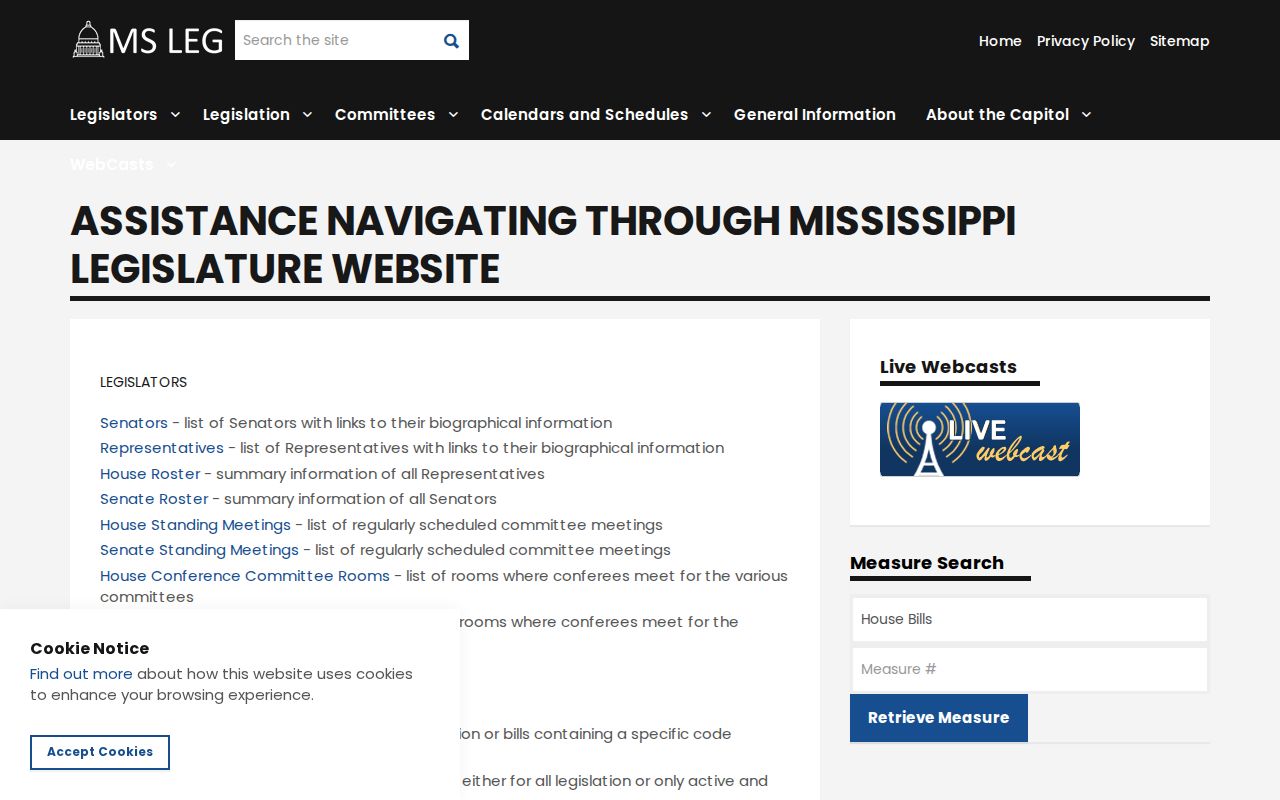
Use the current Code text to check access laws, but direct the actual document request to the Yalobusha court custodian.
Certified Copies and Fees
A plain printout gives useful case information. A certified copy is authenticated by the clerk and may be needed when an official copy is required. Yalobusha has not published a current local fee schedule for plain copies, certification, exemplification, clerk searches, or transcripts. Do not apply another county’s schedule. Call the named clerk, state the exact item needed, and ask for the current total before payment.
| Item | Amount |
|---|---|
| PAMEC annual public registration or renewal | $10 |
| PAMEC public search result | $0.20 per returned page |
| Plain Circuit or Chancery copy | Not located in official county sources |
| Certified or exemplified copy | Not located in official county sources |
Yalobusha County Circuit Clerk, Second District
P.O. Box 1431
Water Valley, MS 38965
662-473-1341
Yalobusha Court Record PAMEC Access Costs
PAMEC is the public, read-only component of Mississippi Electronic Courts for participating courts. A non-attorney must register, accept the user terms, and select an online card or electronic-check payment path or a mailed-check path for the $10 annual registration or renewal. The official terms state that public use is billed at $0.20 for each page returned by a search, including one page for a no-match search, with quarterly billing.
Those charges are PAMEC access charges, not a local certified-copy fee. A card or e-check can carry a third-party processing fee, but its amount is not stated in the local research. Mail-check access can take longer to activate. The PAMEC non-attorney terms are the authoritative source to check before registering.
The Northern District of Mississippi is shown here because federal court files use a separate PACER and Clerk access path.
Federal access does not replace PAMEC or a Yalobusha clerk request for a Mississippi state-court record.
Public Access and Sealed Records
Public access depends on the court, the document, and applicable court rules. PAMEC can make non-restricted docket sheets, notices, and electronic documents available, but restricted material will not be available remotely. Youth Court files, adoption proceedings, sealed cases, expunged matters, and protected personal identifiers have special limits. A restricted result does not prove that no case exists.
Mississippi’s judiciary is a separate branch, so the Mississippi Public Records Act does not control court access in the same way it controls executive-agency records. A written, specific request to the custodian is still the practical fallback when an online record is missing. Ask the clerk about the applicable court rule or procedure rather than treating a county contact form as a court-records system.
Access rules:
Mississippi Code Chapter 25, Article 61 favors public inspection of public-body records, while court records remain subject to judiciary rules and separate-branch limits.
Mississippi Code §43-21-255 governs confidential Youth Court-related records and statutory exceptions.
Mississippi Code §93-17-25 makes adoption proceedings and records confidential.
The Ethics Commission’s Public Records Act page provides the state public-records text referenced in the access discussion.
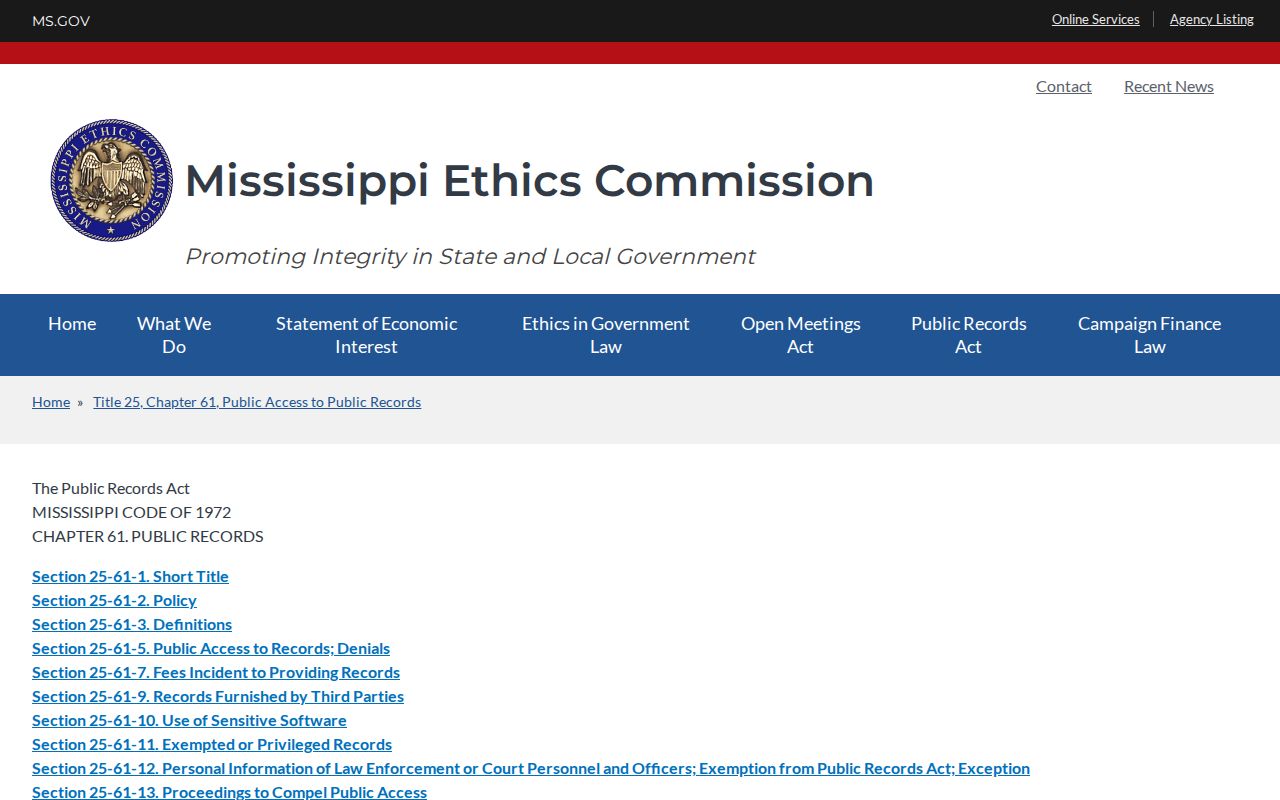
The Act is important context, but court-specific rules and the judiciary’s separate status still make the clerk the practical access point.
The Secretary of State public-records page illustrates the state’s agency request resources.
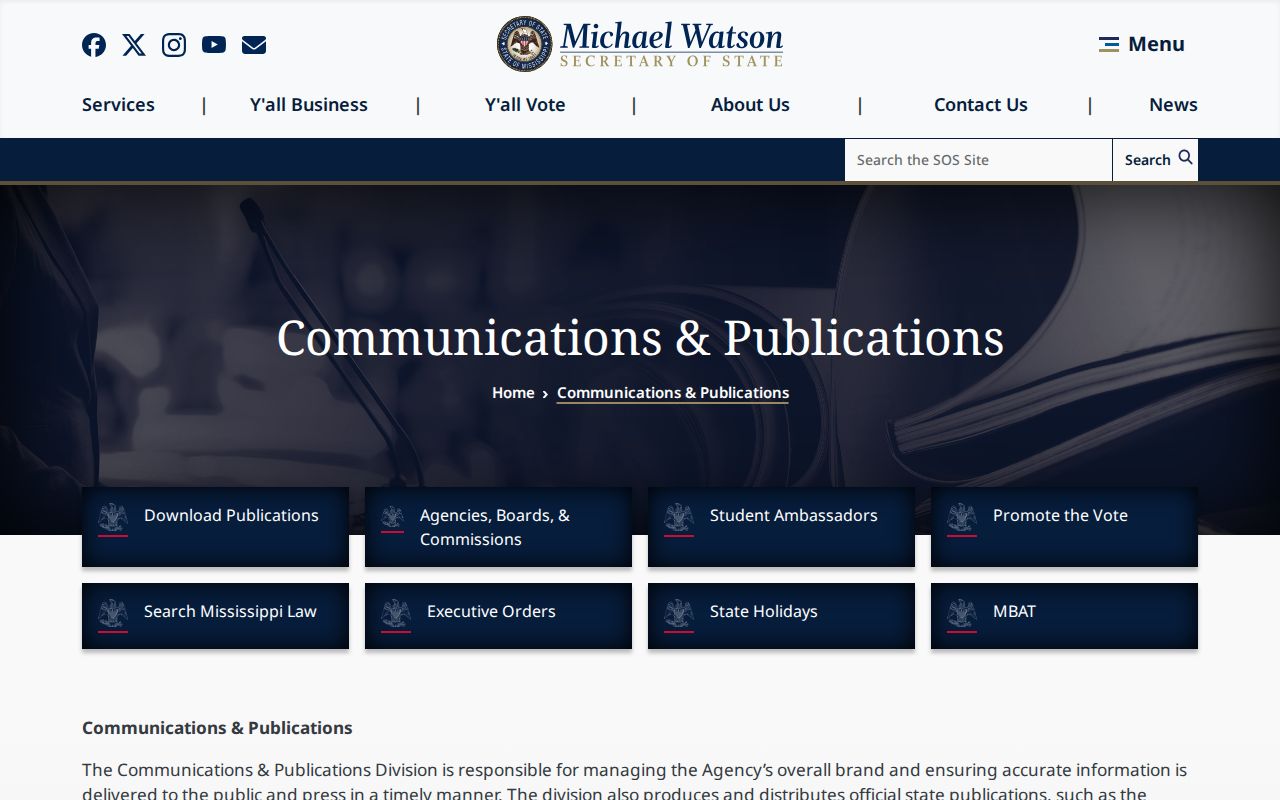
Yalobusha has not published a court-specific copy-request form, so an agency form should not be assumed to be a valid court filing or court-record request.
Yalobusha Court Record Missing Documents
If a PAMEC case header is visible but a document will not open, write down the case number, document title, docket date, court, and district. Then call the responsible clerk and ask whether the item is restricted, attorney-limited, held in paper, or available through a copy request. The county’s forms index does not list a court-copy form, so a specific request is more useful than a general inquiry.
For a Clerk request, include a return address and wait for the office’s payment instruction before remitting money. Circuit Clerk contact email is daryl.burney@yalobushacounty.net, and Chancery Clerk contact email is chanceryclerk@yalobushacounty.net. Neither published email address guarantees a filing or fulfillment method, so confirm it with the office.
Yalobusha Court Record Request Checklist
A clear request is more likely to reach the correct desk. State the court, First or Second Judicial District, case number, parties, filing year, and the exact record sought. Identify whether the request is for a docket sheet, filed document, plain copy, certified copy, or an archival item. The county’s published forms page has no dedicated court-copy form.
For a record that cannot be supplied remotely, ask whether the correct courthouse has a public terminal or staff-assisted search. The official sources do not publish Yalobusha terminal locations, so a call ahead is necessary.
Yalobusha Court Record Payment Gaps
Local sources document PAMEC’s public-access fees but not the amount for a plain or certified clerk copy. This distinction matters because an electronic search charge is not a certification charge. Ask the clerk for the current total, acceptable payment method, and delivery options before enclosing payment with a request.
Do not rely on a fee list from another Mississippi county. Yalobusha’s court offices, not the statewide PAMEC registration screen, set the applicable local copy instructions.
Yalobusha Court Record Archive Custody
Older Yalobusha files may remain with the clerk, appear on microfilm, or be cataloged in the State Archives. Ask the current custodian to identify the record series and whether the material has moved. Historic bound dockets are still court-record sources even when they are not available through the electronic docket system.
Archive access can involve handling limits or restricted material. A request with an approximate year, court, party, and docket or book type gives staff a useful starting point.